Visualising Digital Entropy
Project 2. (Nov – Jan 2026)
Brief: The brief was to create a visual composition that explores distortion and digital decay as both aesthetic and conceptual phenomena. The project critically examines the breakdown of digital signals and systems, visualising processes of noise, degradation, and loss through abstract form. By foregrounding error and instability, the work challenges ideals of digital clarity and control, proposing decay as a meaningful mode of expression.
Topic Choice: This project focuses on the visualisation of distortion and digital decay within computational systems. It investigates how noise, signal degradation, and data corruption can be translated into abstract visual forms. By treating distortion as a generative rather than accidental process, the work critically examines digital materiality, failure, and transformation within contemporary media.
Artist Inspiration: This project draws inspiration from artists working with visual sound, audiovisual distortion, and signal decay as material conditions of digital media. Key references include Ryoji Ikeda, whose work explores data, noise, frequency, and the limits of perception, translating distortion into precise visual systems. Hito Steyerl’s examination of compression, loss, and the circulation of poor-quality images informs the project’s critical approach to digital decay as both a cultural and political condition. The early video experiments of Nam June Paik further influence the work, particularly his use of signal manipulation and distortion to reveal decay as an expressive and structural element of electronic media.
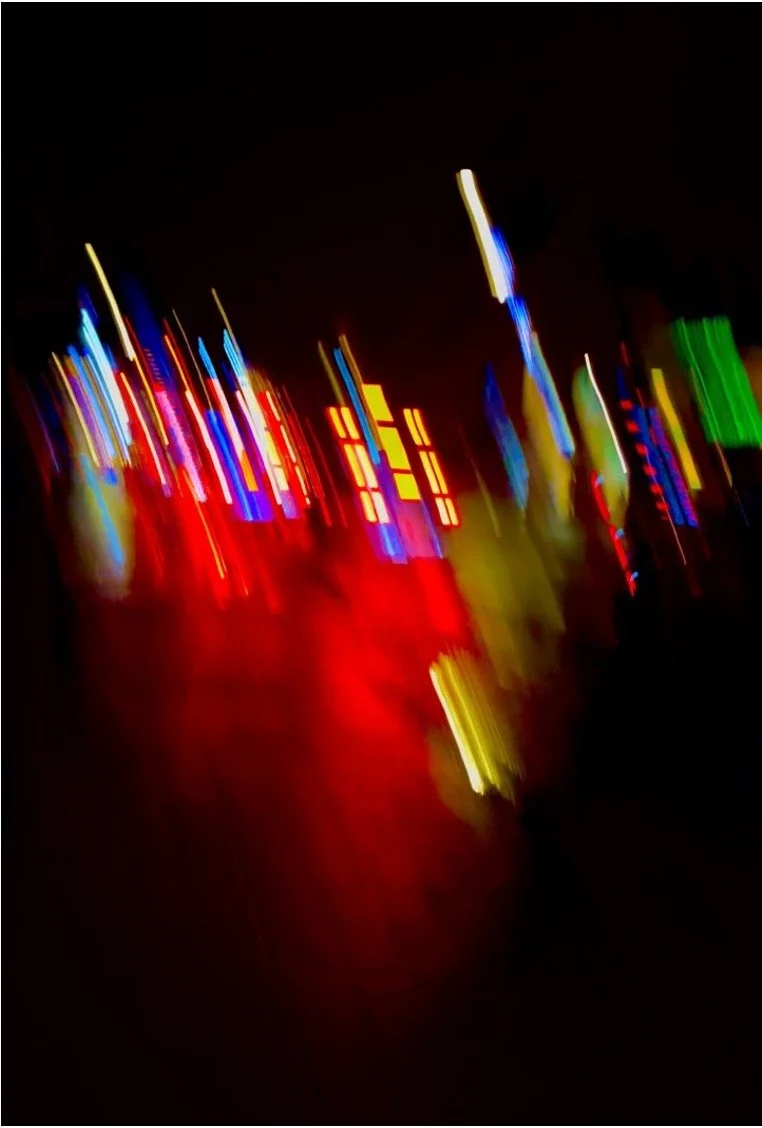
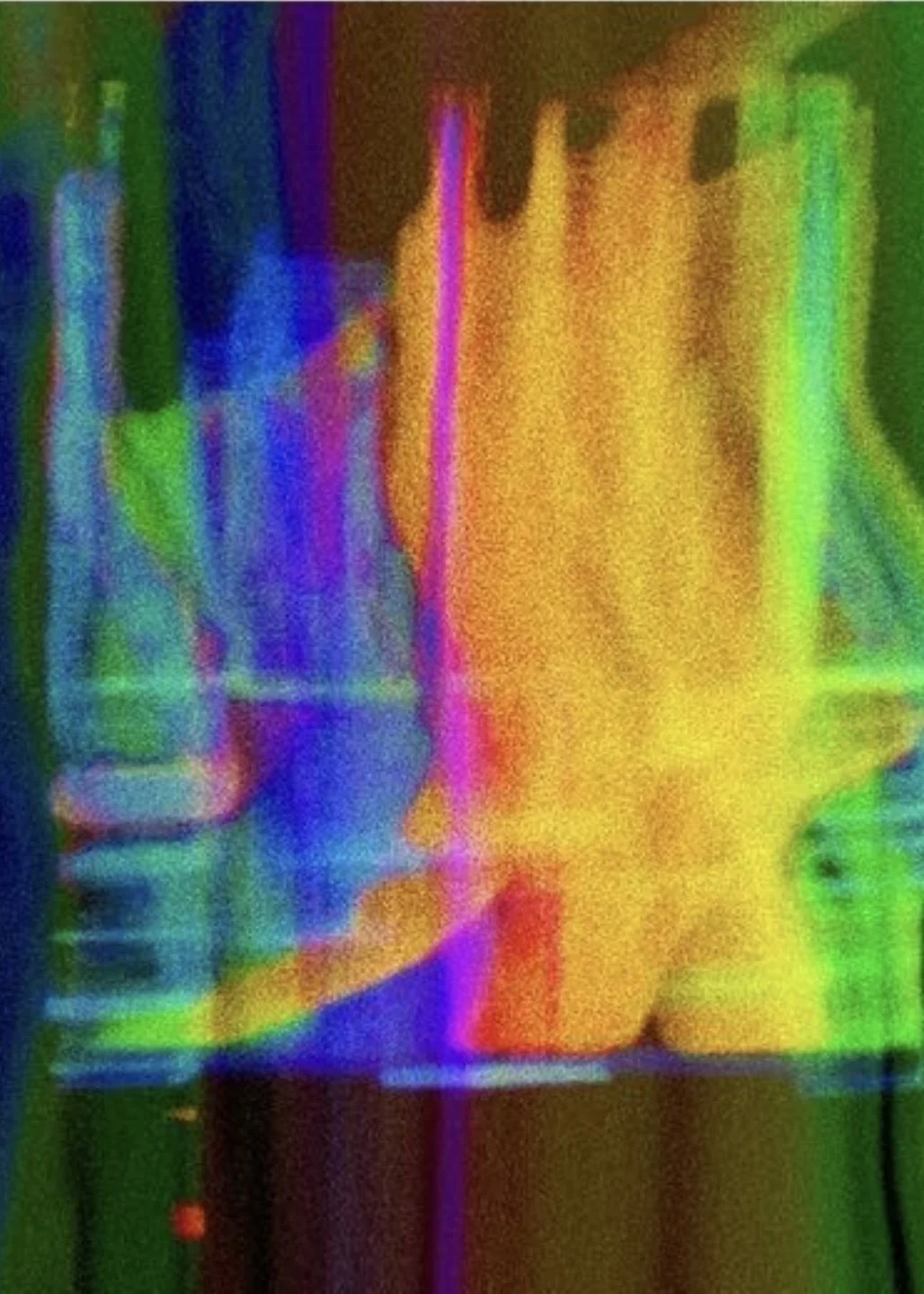
Starting Process: Informed by theoretical research and artist inspiration, the project began with an exploration of colour and light as distorted visual signals. I started by photographing coloured light using a slow shutter technique, allowing motion blur and image smearing to occur. This process produced visual artefacts such as colour bleeding and loss of clarity, which became central to the work’s investigation of distortion. These early visual experiments established a language of degradation and instability, drawing parallels to digital entropy and the breakdown of visual information within computational systems.
Project 2 – Photos
Project 2 – Evaluating
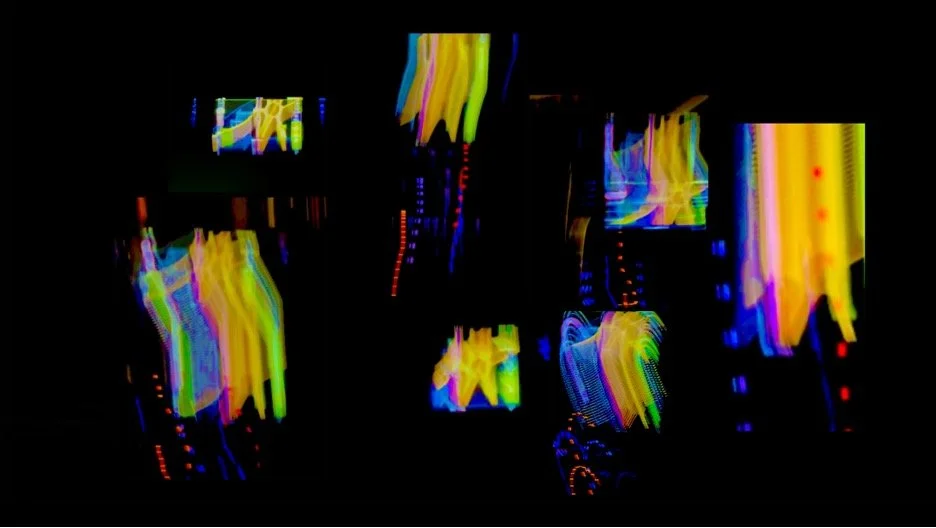
Realisation: Through experimentation with coloured light using a slow shutter technique, allowing motion blur and image smearing to occur visual artefacts such as colour bleeding and loss of clarity were produced. This became central to the work’s investigation of distortion. These early visual experiments established a language of degradation and instability, drawing parallels to digital entropy and the breakdown of visual information within computational systems.
Development: In response, the project developed into a visually driven process focused on representing digital entropy. Building on research into visual sound, audiovisual distortion, and signal decay as material conditions of digital media, the work draws on key artistic influences. Ryoji Ikeda’s exploration of data, noise, frequency, and perceptual limits informed the project’s use of distortion as a structured visual system. Hito Steyerl’s examination of compression, loss, and the circulation of poor-quality images shaped the project’s critical understanding of digital decay as both a cultural and political condition. The early video experiments of Nam June Paik further influenced the work, particularly his use of signal manipulation to reveal decay as an expressive and structural element of electronic media.
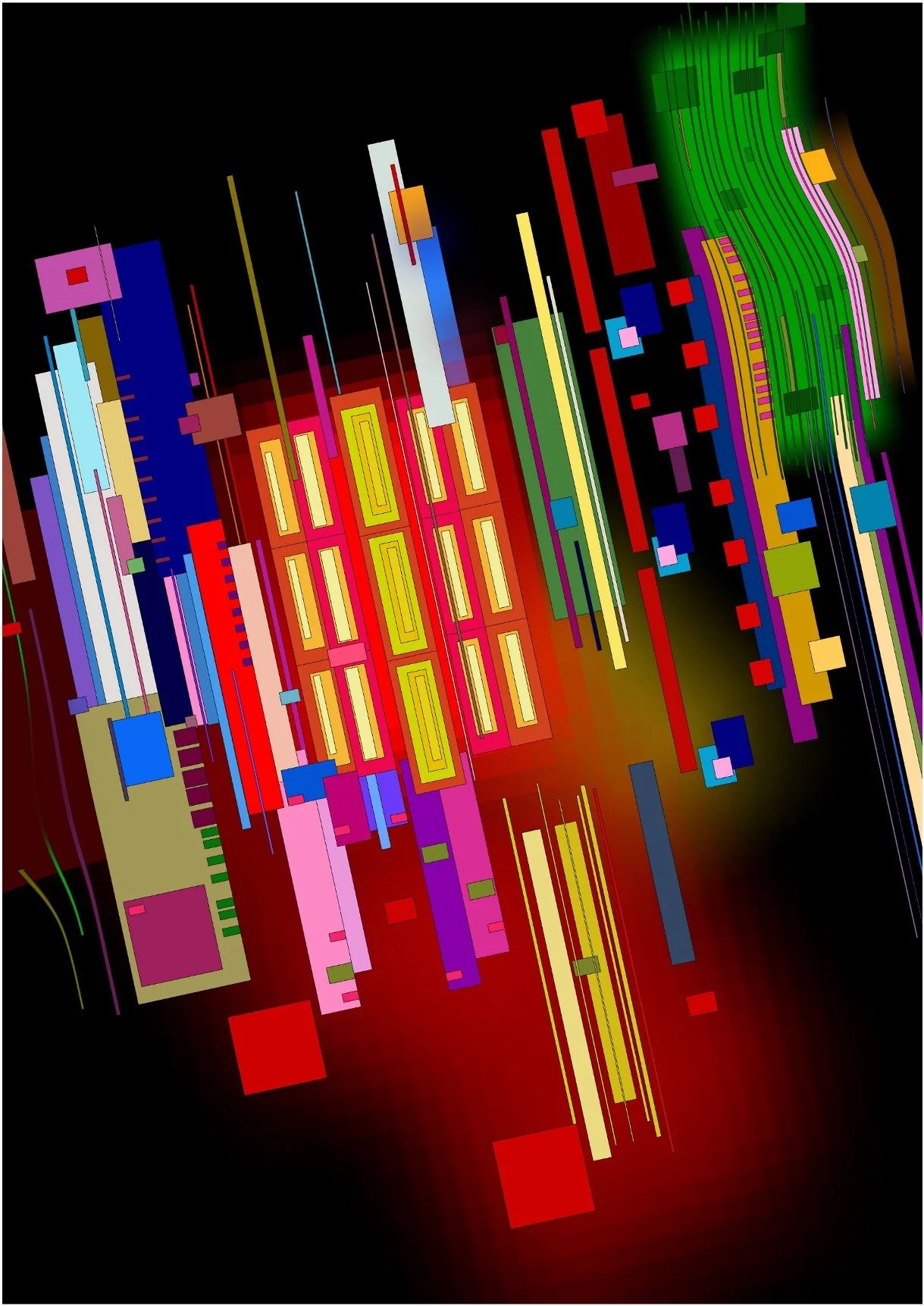
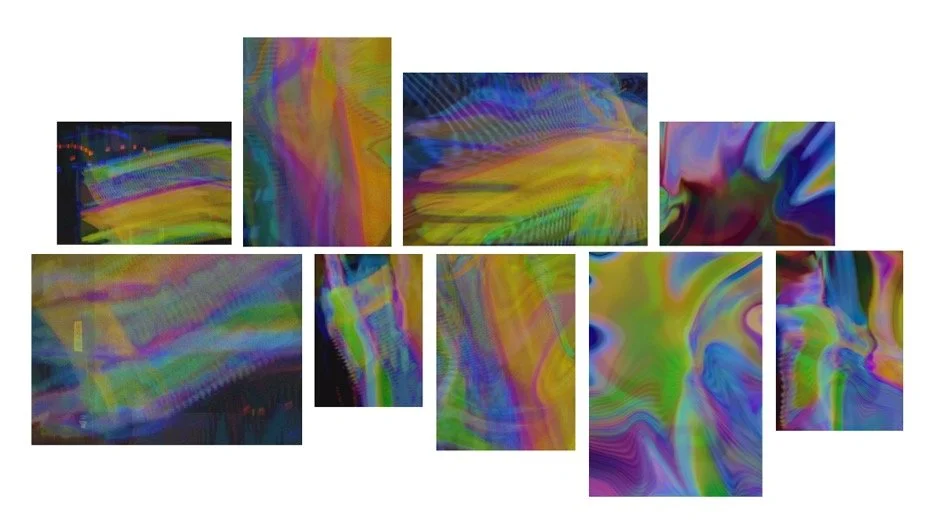
These references informed my own process of constructing visual images that embody digital entropy. I began experimenting with layered imagery and digital effects in Photoshop, using distortion, degradation, and accumulation to push the visuals towards instability. This stage of development focused on translating conceptual ideas of decay into a tangible visual language, allowing error and breakdown to become central compositional elements rather than technical flaws.
Project 2 – Image Development
Project 2 – Final Outcome
Project 2 – Development from Final Outcome
A – Photo using a slow shutter technique
Development: This visual composition was further developed through pixelation and the fragmentation of the image into block-like forms. By reducing the visual information into discrete digital units, the work emphasises the material structure of the screen itself. This transformation produces a deliberately degraded aesthetic, where clarity is disrupted, and the image begins to break down into its constituent pixels. Through this process, distortion becomes visible as a structural condition rather than a surface effect, reinforcing the project’s exploration of digital entropy and the instability of computational systems.
B – Created in Photoshop